Crown Royal: The Story Behind Canada’s Iconic Whisky
Some whisky brands become famous because of their age. Others become famous because of their taste, history, or connection to a particular culture.
Crown Royal has something else going for it too: a story involving royalty.
Known for its distinctive purple packaging, elegant bottle, and smooth Canadian whisky, Crown Royal has become one of the most recognizable whisky brands in the world.
But how did a Canadian whisky become associated with a king?
The Royal Beginning
The story of Crown Royal began in Canada in the 1930s.
In 1939, King George VI and Queen Elizabeth visited Canada. To commemorate the royal visit, Canadian whisky makers created a special whisky that they believed was worthy of the occasion.
The whisky was presented to the royal couple, and the name Crown Royal was eventually adopted.
The royal connection became a central part of the brand’s identity.
What began as a whisky created for a historic royal visit eventually became a globally recognized Canadian whisky.
What Makes Canadian Whisky Different?
Canadian whisky has its own traditions and production styles.
Canadian distillers are known for blending different whisky components to create distinctive and consistent flavor profiles.
Crown Royal is particularly associated with blending and a smooth, approachable character.
Canadian whisky can also use a variety of grains, including corn, rye, wheat, and barley, depending on the particular whisky.
This flexibility gives Canadian whisky makers considerable room to develop different styles.
The Famous Purple Bag
One of Crown Royal’s most recognizable features isn’t actually the bottle.
It’s the purple velvet bag.
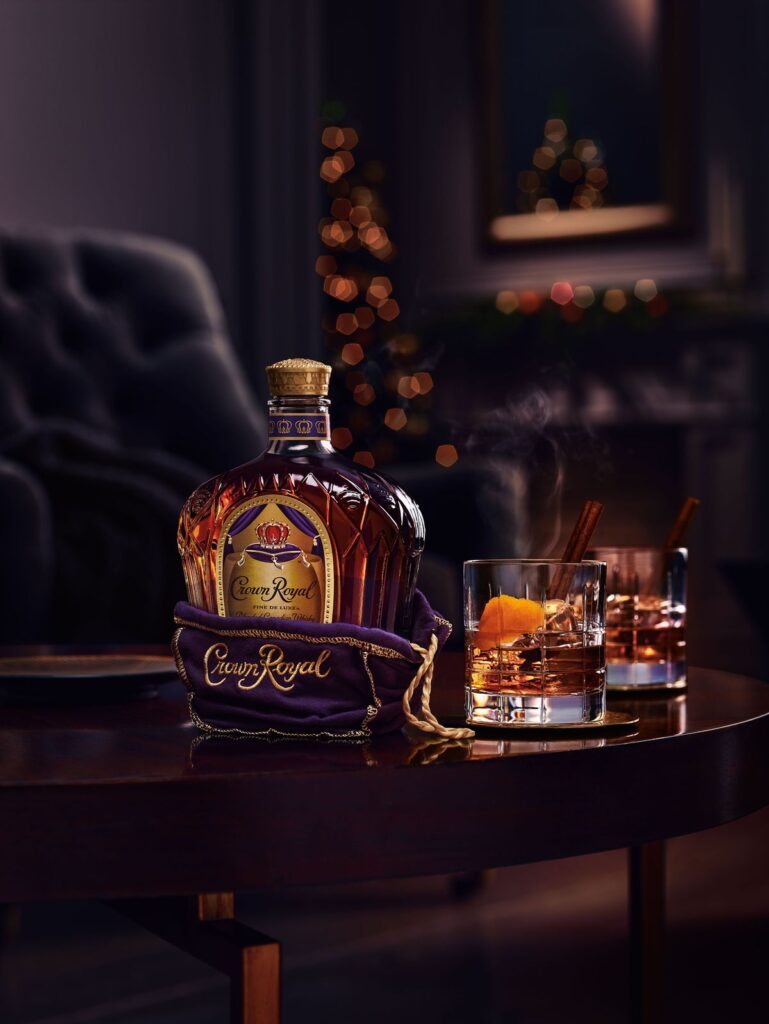
The brand’s whisky is traditionally presented inside a soft purple bag with gold-colored details. The packaging was designed to reinforce the whisky’s royal image and give the bottle a distinctive appearance.
Over time, the bag became almost as recognizable as the whisky itself.
It also helped Crown Royal stand out from other bottles on crowded liquor-store shelves.
What Does Crown Royal Taste Like?
Taste depends on the specific Crown Royal expression, but the classic whisky is often described as having a smooth and relatively approachable character.
Common flavor descriptions include:
- Vanilla
- Caramel
- Oak
- Light fruit
- Sweet grain
- Gentle spice
The combination of different whiskies and maturation in oak contributes to the final flavor.
The blending process is particularly important because the goal is to create a balanced and consistent whisky rather than simply relying on one individual barrel.
Rye and the Canadian Whisky Tradition
Rye has an important place in Canadian whisky history.
In fact, Canadian whisky is sometimes casually referred to as “rye” in Canada, even when the whisky contains significant amounts of other grains.
Crown Royal has released several expressions that highlight different characteristics of Canadian whisky, including versions where rye plays a more prominent role.
Rye can contribute spicy, peppery, and slightly dry characteristics to whisky, creating a different experience from sweeter grain profiles.
More Than One Crown Royal
The classic Crown Royal is only part of the brand’s lineup.
Over the years, Crown Royal has introduced different expressions featuring variations in grain recipes, maturation, blending, and finishing.
Some focus on particular flavors, while others explore different cask influences.
This range allows people to compare how changes in production can influence the character of the final whisky.
For someone new to Canadian whisky, the classic expression is often the obvious starting point before exploring the broader range.
Crown Royal and Popular Culture
Crown Royal has become deeply connected with North American popular culture.
The distinctive purple packaging has appeared in bars, restaurants, sporting environments, music, television, and advertising.
The brand has also developed strong connections with sports, particularly through marketing partnerships and sponsorships.
Its recognizable appearance has helped turn Crown Royal into more than a Canadian whisky—it has become a familiar cultural symbol.
Why Is Crown Royal So Popular?
Several factors have helped Crown Royal maintain its popularity.
Its royal story gives the brand an unusual origin story.
Its packaging makes it immediately recognizable.
Its approachable flavor appeals to people who may not be experienced whisky drinkers.
Its variety of expressions gives enthusiasts different versions to explore.
And perhaps most importantly, Crown Royal has maintained a strong connection to Canadian whisky while building a global identity.
How Do People Enjoy Crown Royal?
There are many ways people choose to enjoy whisky.
Some prefer it neat to experience the aroma and flavor without other ingredients.
Others add ice or a small amount of water.
Crown Royal is also commonly used in cocktails, where ingredients such as citrus, ginger, bitters, or other mixers can change the overall flavor.
There isn’t one universally correct way to enjoy whisky. Personal preference is a major part of the experience.
The Importance of Responsible Drinking
Crown Royal is an alcoholic beverage, so responsible consumption is important.
Alcohol can affect judgment, coordination, and reaction time. Anyone who chooses to drink should understand their limits and should never drive after drinking.
Whisky can also be appreciated through its history, production techniques, packaging, and cultural significance without consuming alcohol.
Final Thoughts
Crown Royal is more than a whisky with a purple bag.
Its identity is built around Canadian whisky tradition, blending, oak maturation, distinctive packaging, and an unusual connection to British royalty.
From a whisky created to commemorate a royal visit to a globally recognized brand, Crown Royal has developed a story unlike many other whiskies.
And perhaps that’s what makes the bottle so memorable: when you see that purple bag, you’re not just seeing a whisky brand—you’re seeing a piece of Canadian whisky history.